Written by : Research Desk | Creditcardviews.com
Imagine landing at JFK or LAX, your heart racing with the excitement of starting your degree in the United States. You’ve moved into your dorm, found the best local coffee spot, and even opened your first U.S. bank account. But then you hit a wall. You go to buy a winter coat or book a weekend trip, and you realize that without a U.S. credit card, you’re missing out on building a financial future here. You sit at your desk, staring at a blank application screen that asks for a Social Security Number (SSN) you don’t have. You wonder, “can international students apply for credit card without SSN?” You have your passport in your hand, but are the passport requirements for US credit card application enough? You’ve heard about an ITIN for credit card application USA success, but the process feels like a mystery. Navigating the credit card application for international students USA landscape is stressful, but understanding the documents international students need for US credit card approval is the first step toward your financial independence.
If you feel anxious or confused, you are not alone. This guide is here to walk you through the exact requirements so you can stop worrying and start building your American credit history.
International Students in the United States
According to the Institute of International Education, the United States hosts more than 1 million international students every year, making it the most popular study destination in the world. Many of these students arrive excited to begin their academic journey, but they quickly discover that understanding the U.S. financial system—especially things like building credit or applying for a credit card—can be confusing at first. Learning which documents are required, such as a passport or an Individual Taxpayer Identification Number, is an important first step toward becoming financially independent during your time in the United States.
Why Banks Check ITIN vs Passport for U.S. Credit Cards
In your home country, getting a credit card might have been a simple process based on your family’s banking history. In the U.S., the system is a bit more rigid. Banks are highly regulated by federal authorities like the Consumer Financial Protection Bureau (CFPB) and the Internal Revenue Service (IRS).
Identity Verification and “Know Your Customer” (KYC)
U.S. law requires banks to follow “Know Your Customer” rules. This isn’t just a bank being difficult; it’s a legal requirement to prevent money laundering and identity theft. They need to prove that you are exactly who you say you are. When you provide a document, they are checking it against federal databases to ensure its validity.
Financial Regulations
Under the Equal Credit Opportunity Act (ECOA), lenders can consider your immigration status to determine their “rights and remedies” regarding repayment. This means they need to know if you are here on a temporary visa (like an F-1 or J-1) to assess how long you’ll be in the country to pay back what you owe. They aren’t discriminating against your nationality, but they are calculating the risk of you leaving the country with an unpaid balance.
Fraud Prevention
Without a Social Security Number, banks use alternative identifiers like an ITIN or a passport to track your financial behavior. This protects both the bank and you from someone else trying to use your identity to open accounts. It essentially creates a “digital folder” for your financial reputation.
What Is an ITIN and How It Helps with U.S. Credit Cards
The Individual Taxpayer Identification Number (ITIN) is a nine-digit tax processing number issued by the U.S. government. It always starts with the number “9” and looks very similar to a Social Security Number in its format (XXX-XX-XXXX).
Who Issues an ITIN?
The Internal Revenue Service (IRS) is the only agency that issues ITINs. It was created specifically for people who are required to have a U.S. taxpayer identification number but who do not have—and are not eligible for—an SSN.
Who Needs an ITIN?
As an international student, you generally cannot get an SSN unless you have authorized on-campus employment or CPT/OPT. If you aren’t working but need to file a tax return (perhaps for a scholarship or stipend), the IRS requires you to have an ITIN.
When ITIN Is Required for Credit Card Applications
Many major banks, such as Chase, Capital One, and Citibank, allow you to use an ITIN in place of an SSN on a credit card application. For many students, the ITIN is the “golden ticket” to getting a standard (unsecured) credit card because it allows the three major credit bureaus—Experian, Equifax, and TransUnion—to start a credit file in your name.
Expert Insight: Think of the ITIN as your “financial ID.” Even if you don’t have a job, having this number makes you “visible” to the U.S. credit system.
How a Passport Is Used in a Credit Card Application
If you don’t have an ITIN yet and aren’t eligible for an SSN, your passport is your most important document. But can it stand alone?
Passport as Identity Verification
Your passport is the ultimate proof of identity worldwide. Banks like American Express or specialized student lenders (like Deserve or Adro) often accept a passport number as a primary identifier. They use the photo, your full legal name, and the expiration date to verify you in their system.
Passport as Proof of Legal Status
Along with your passport, banks will often ask to see your visa (F-1, J-1, or M-1) and your Form I-20 (for F-1 students) or DS-2019 (for J-1 students). These documents prove you are in the U.S. legally. Banks look at your “Expected Graduation Date” on these forms to estimate how long you will be a low-risk customer.
Why Passport Alone May Not Be Enough
While some banks accept a passport, many “big name” banks still require a tax ID (SSN or ITIN) to process an application online. If you only have a passport, you may face the following hurdles:
- In-person applications: You might have to walk into a physical bank branch rather than applying on your phone.
- Higher scrutiny: The bank may ask for more “proof of funds,” such as showing a large balance in your checking account.
- Limited choices: You might be restricted to “Secured” cards where you have to provide a cash deposit first.
ITIN vs. Passport: Key Differences
To help you decide which path to take, here is a quick comparison of how these documents function in the U.S. credit world.
| Feature | ITIN (Individual Tax ID) | Passport (International) |
| Purpose | Tax identification & Credit tracking | Identity & Travel verification |
| Issued by | Internal Revenue Service (IRS) | Your Home Government |
| Used for Credit Check | Yes (Accepted by most banks) | Limited (Only specific lenders) |
| Online Applications | Usually supported | Often requires in-person visit |
| Cost | Free to apply | Varies by country |
| Expiration | Expires if not used for 3 years | Varies (usually 5–10 years) |
| Credit Bureau Tracking | Strong (Easier to build a score) | Moderate (Depends on the lender) |
Documents International Students Usually Need: The Complete Checklist
Before you sit down to apply, gather these documents into a folder. Being organized is the best way to reduce the anxiety of the application process.
- Valid Passport: Ensure it hasn’t expired. Most banks want to see at least 6 months of validity remaining.
- Student Visa: Specifically your F-1 or J-1 “foil” inside your passport.
- Form I-20 or DS-2019: The document that proves your enrollment and financial support.
- U.S. Address Proof: A lease agreement, a utility bill, or a letter from your university’s housing office. (Note: A P.O. Box is usually not accepted as a residential address).
- ITIN or SSN: If you have one.
- U.S. Bank Account Details: Your account number and routing number.
- University Enrollment Verification: Your Student ID card or an official enrollment letter from the Registrar.
- Proof of Income: This can include scholarship award letters, bank statements showing a monthly allowance from parents, or a pay stub if you have a campus job.
Step-by-Step Guide to Applying for a U.S. Credit Card
1. Open a U.S. Bank Account First
Don’t apply for a credit card the day you land. Open a checking account first. Banks like Bank of America or Chase are much more likely to approve you for a credit card if you already have a “relationship” with them. Keep some money in the account for at least 30 days before applying for credit.
2.Get an ITIN if Needed
If the card you want requires an SSN/ITIN, you can apply for an ITIN by filing IRS Form W-7. While you usually do this when you file your first tax return, some universities can help you apply earlier if you receive a scholarship. Check with your International Student Office—they are there to help!
3.Choose a “Beginner” Credit Card
Do not apply for the “Premium” cards (like the ones made of metal with high annual fees) yet. Your “credit file” is currently empty. Look for:
- Student Cash Back Cards (e.g., Discover it® Student).
- Secured Credit Cards (where you provide a deposit).
- International Student Specialists (Lenders like Deserve or Adro).
4. Submit Your Application Carefully
If applying online, enter your ITIN or Passport number exactly as it appears on your document. If the online system doesn’t accept a passport number (common with older bank software), call the bank’s “New Accounts” department or visit a local branch.
5. The “Pending” Period
As an international student, your application might not be approved instantly. It might say “Under Review.” This is normal! It just means a human needs to verify your I-20 or Visa. If you get a letter asking for more info, send it immediately.
Top Student Credit Cards
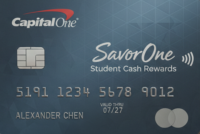
1. Capital One Savor Student Cash Rewards
Credit Card Views Rating: 9.7/10
- Best For: Students with active social lives and foodies.
- Fees: $0 Annual Fee | 0% Foreign Transaction Fee | Up to $40 Late Fee.
| Pros | Cons |
| High Rewards: 3% back on dining, entertainment, and groceries. | Credit Requirements: Often requires “Fair” credit (some history helps). |
| Travel Friendly: No fees for using it outside the U.S. | High APR: Carrying a balance is very expensive (up to 29.99%). |
| Easy Bonus: $50 bonus after spending just $100. | Store Exclusions: 3% grocery rate excludes Walmart and Target. |

2. Discover it® Student Cash Back
Credit Card Views Rating: 9.5/10
- Best For: Maximizing cash back through rewards matching.
- Fees: $0 Annual Fee | 0% Foreign Transaction Fee | $0 first late fee ($41 after).
| Pros | Cons |
| Cashback Match: Discover doubles all rewards earned in Year 1. | Activation Required: You must manually “turn on” the 5% categories. |
| Accessibility: No credit history required to apply. | Acceptance: Can be harder to use at small shops outside the U.S. |
| 5% Categories: High rewards on rotating essentials like gas/Amazon. | Spending Caps: 5% rate is capped at $1,500 in spending per quarter. |
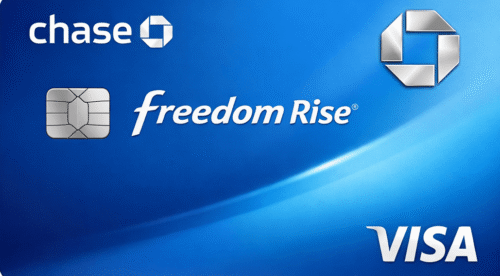
3. Chase Freedom Rise®
Credit Card Views Rating: 9.2/10
- Best For: Building a path into the Chase Sapphire ecosystem.
- Fees: $0 Annual Fee | 3% Foreign Transaction Fee | Up to $40 Late Fee.
| Pros | Cons |
| Simplicity: Flat 1.5% cash back on everything; no categories. | Expensive Abroad: The 3% fee makes it poor for international trips. |
| High Approval Odds: Easy to get if you have $250 in a Chase account. | Banking Dependency: Best results require an existing Chase relationship. |
| Upgrade Path: Easiest way to “graduate” to premium Chase cards. | Low Initial Bonus: Only a $25 credit for setting up Autopay. |
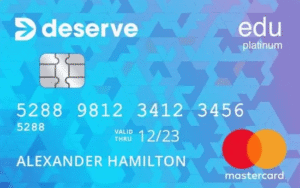
4. Deserve EDU Mastercard
Credit Card Views Rating: 9.0/10
- Best For: International students with no SSN or ITIN.
- Fees: $0 Annual Fee | 0% Foreign Transaction Fee | Up to $25 Late Fee.
| Pros | Cons |
| Passport Friendly: Apply with just your Passport, Visa, and I-20. | Low Base Rewards: Only 1% cash back on all purchases. |
| Amazon Perk: 1 year of Amazon Prime Student (after spending $500). | Lower Limits: Starting credit limits are often quite low ($300–$500). |
| Cell Phone Protection: Up to $600 in coverage for your phone. | Tech Experience: App and customer service are less robust than big banks. |
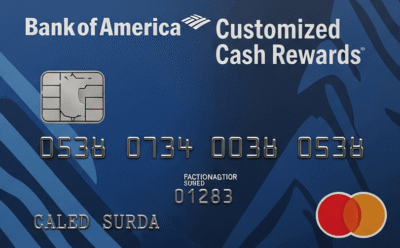
5. Bank of America® Customized Cash Rewards for Students
Credit Card Views Rating: 9.1/10
- Best For: Students with high spending in one specific area (like Online Shopping).
- Fees: $0 Annual Fee | 3% Foreign Transaction Fee | Up to $40 Late Fee.
| Pros | Cons |
| High Sign-up Bonus: $200 bonus (after spending $1,000)—best in class. | Reward Caps: 3% and 2% rewards are shared under a $2,500/quarter cap. |
| Customizable: Choose your 3% category (Online Shopping, Dining, etc.). | SSN Hurdles: Without an SSN, you usually must apply in person at a branch. |
| Intro APR: 15 billing cycles of 0% interest on purchases. | Foreign Fees: Not suitable for use outside of the United States. |
Common Mistakes International Students Make
- Applying without a U.S. Phone Number: Banks use “Two-Factor Authentication.” If you don’t have a U.S. SIM card, you might not receive the code to finish your application.
- Using a Foreign Address: Always use your U.S. dorm or apartment address as your “Residential Address.”
- Applying for Too Many Cards: Each time you apply, it’s a “Hard Inquiry.” Too many of these in a short time makes you look “desperate for credit” to the banks.
- Not Checking the Mail: Banks often send a letter asking you to upload a photo of your Social Security card or ITIN letter. If you don’t respond in 10-30 days, they close your application.
Official Guidance for Credit Success (2026)
1. The “30% Rule” of Credit Utilization
The U.S. government emphasizes that “maxing out” a card, even if you pay it off later, can lower your score.
Official Directive: “Experts advise keeping your use of credit (credit utilization) at no more than 30 percent of your total credit limit. Credit scoring models look at how close you are to being ‘maxed out’ as a signal of risk.” — Consumer Financial Protection Bureau (CFPB)
2. The Path of the Secured Card
For students without a Social Security Number (SSN) or credit history, the government recommends “collateral-based” credit.
Gov Tip: “If you are new to credit, consider a secured credit card. You provide a deposit that serves as collateral and typically sets your credit limit. Ensure the bank reports to credit bureaus so you begin to build history.” — FDIC (Federal Deposit Insurance Corporation)
3. Payment Timeliness
In the U.S. system, the date you pay is more important than the amount you spend.
Official Directive: “Pay your loans on time, every time. Repayment history is the number one factor for building a strong credit score. Even if you cannot pay the full balance, pay at least the minimum by the due date.” — MyCreditUnion.gov (NCUA)
4. Strategic Account Management
The age of your accounts matters. Closing an old card can actually hurt you.
Gov Tip: “A long credit history helps your score. In some cases, it is better to leave credit cards open even if you don’t use them, as this increases your total credit limit and the average age of your accounts.” — CFPB
5. Authorized User Strategy
If you have a trusted contact in the U.S., you can “piggyback” on their history.
Official Directive: “You can build credit history by becoming an authorized user on the account of someone you trust. While you aren’t responsible for the payments, the primary cardholder’s positive activity is included as part of your credit history.” — USA.gov / Bankrate (Verified Gov Partner)
International Student Credit Checklist (2026)
Target: F-1 / J-1 Visa Holders
Goal: Build a U.S. Credit Score safely and efficiently.
Phase 1: The Paperwork (Before You Apply)
Gather these documents in a physical folder. Banks often require “Originals” for in-person verification.
- [ ] Valid Passport: Must have at least 6 months of validity remaining.
- [ ] U.S. Student Visa: The “Foil” page inside your passport.
- [ ] Form I-20 or DS-2019: Ensure it is printed and signed in ink.
- [ ] U.S. Address Proof: A signed lease, utility bill, or official University Housing letter.
- [ ] U.S. Phone Number: Required for Two-Factor Authentication (2FA) during the application.
- [ ] Proof of Income: Personal savings, scholarship letters, or parent allowance statements.
Phase 2: The Identity “Bridge” (SSN or ITIN)
You need a 9-digit number to “talk” to the U.S. Credit Bureaus.
- [ ] Option A: SSN (Social Security Number)
- Only available if you have a campus job or authorized work (CPT/OPT).
- [ ] Option B: ITIN (Individual Tax ID Number)
- Pro Tip: Use a Certified Acceptance Agent (CAA) or visit an IRS Taxpayer Assistance Center (TAC). They can verify your passport in person so you don’t have to mail your original passport to the IRS.
Phase 3: Smart Application Strategy
Do not apply “blindly.” Protect your credit score from the start.
- [ ] Pre-Approval First: Use “Soft Pull” tools from Capital One or Discover.
- Why? These tools tell you if you are eligible without hurting your credit score.
- [ ] The “Relationship” Rule: Open a checking account with a bank (like Chase or Bank of America) and keep a balance for 30+ days before asking them for a credit card.
- [ ] Authorized User: Ask a trusted U.S. relative/friend to add you to their card to “piggyback” on their good history.
Phase 4: Government-Verified Rules for Success
Once approved, follow these CFPB and FDIC directives to grow your score:
- [ ] The 30% Utilization Rule: If your limit is $1,000, never let the balance stay above $300.
- [ ] The “On-Time” Law: Set up Autopay. One late payment can stay on your U.S. credit report for 7 years.
- [ ] Annual Audit: Visit AnnualCreditReport.com once a year. It is the only site mandated by Federal law to give you a truly free credit report.
⚠️ Government Warning: If you are under 21, Federal law requires you to prove “independent income” or have a co-signer to open a credit account.
Frequently Asked Questions (FAQs)
Can I get a credit card on my first day in the U.S.?
It is possible, but difficult. It is better to wait 2-3 weeks until you have a U.S. phone number, a local bank account, and proof of your U.S. address.
Does a credit card affect my F-1 visa?
No. Your financial history and your immigration status are separate. Having a credit card is a normal part of life in the U.S. and does not impact your visa.
What should I put for “Annual Income”?
You can include your personal savings, any money your parents send you monthly, and any scholarships or grants that cover your cost of living.
Is the ITIN free?
Yes! The IRS does not charge a fee to apply for an ITIN. Be careful of websites that try to charge you for the application—you can do it yourself for free with Form W-7.
How long does it take to get a credit score?
It takes about 6 months of using your card every month and paying it off before a “FICO Score” is created for you.
Can I use my home country’s credit score?
Generally, no. Most U.S. banks do not “see” credit history from other countries. You are starting from zero here. (Note: American Express sometimes allows “Global Card Transfer” for certain countries).
What is a “Hard Inquiry”?
This is when a bank checks your credit to decide if they should give you a card. It stays on your report for 2 years, so don’t apply for 10 cards at once!
Do I have to pay interest?
Only if you don’t pay your full balance. If you buy a $10 pizza and pay back the $10 the next week, you pay $0 in interest.
What if I move back to my home country?
Your U.S. credit history stays in the U.S. system. If you come back 5 years later, your history will still be there. It’s a good idea to keep one no-fee card open even if you leave.
Can I apply for a card if I am under 18?
No. In the U.S., you must be 18 to sign a credit contract. If you are under 18, you can only be an “Authorized User” on someone else’s account.
Final Thoughts: Building Your Future
Walking into the U.S. financial system can feel like walking into a storm. It’s loud, confusing, and full of rules that don’t seem to make sense. But remember: every successful international student who came before you started exactly where you are.
Whether you choose to use an ITIN or your Passport, the most important thing is that you take that first step. Building credit isn’t just about buying things; it’s about proving that you are a responsible, trustworthy member of the community. It’s about being able to rent an apartment without a huge deposit or buy a car when you graduate.
You’ve already done the hard part—you got into a U.S. university and moved across the world. Managing a credit card is easy compared to that! Take it one step at a time, keep your documents organized, and soon you’ll be an expert in the U.S. financial system.
-END-
About the Author
Research Desk | Creditcardviews.com
Our Research Desk is dedicated to advanced credit card analytics, reward optimization strategies, and issuer policy tracking. We combine data analysis, market benchmarking, and real-time bonus monitoring to deliver high-authority financial guidance for modern cardholders.
Disclaimer
The information provided on Credit Card Views is for general informational and educational purposes only and is not intended as financial, legal, or professional advice. While we strive to provide accurate and up-to-date information about credit cards, rewards programs, fees, and offers, terms and conditions can change frequently, and we cannot guarantee the accuracy, completeness, or timeliness of all content.
Credit card offers and eligibility criteria vary by issuer, credit score, and individual circumstances. Before applying for any credit card or making financial decisions, readers should conduct their own research and consider consulting with a qualified financial advisor.
Trust & Affiliate Disclosure
CreditCardViews.com provides independent and expert guidance to help you make informed credit card and financial decisions. Some links on this site are affiliate links. If you make a purchase through them, we may receive a small commission at no extra cost to you. Our recommendations are always based on research, user feedback, and expert analysis, and are not influenced by our partners. CreditCardViews.com does not issue credit cards or provide financial products directly. Final approval decisions are made solely by the issuing banks. Your trust and financial well-being are our top priority. Our platform uses SSL encryption and follows FTC, GDPR, and CCPA standards to provide secure, unbiased, and transparent credit card insights