Written by : Alen Vi | Creditcardviews.com
You’ve done everything right. You moved to the United States, secured your Social Security Number (SSN) or Individual Taxpayer Identification Number (ITIN), and finally received that crisp, new envelope in the mail. But when you peel back the paper to see your spending power, the excitement turns to a familiar sting of disappointment: a $300 or $500 limit. It feels like an insult. You have a stable job, you pay your rent on time, and you’re ready to build a life here—yet the bank treats you like a financial risk.
In 2026, with U.S. credit card balances reaching $1.18 trillion and the average American holding 4.3 cards, the system is more robust than ever, but it is also more guarded. If your first U.S. credit card limit feels stuck in the basement, you aren’t alone. For millions of newcomers, international students, and young adults, the “starter limit” is a frustrating but surmountable rite of passage.
The truth is, the U.S. credit system isn’t broken—it’s just incredibly cautious. At Credit Card Views, our research desk has analyzed over 200 card products and interviewed former underwriting analysts to bring you this definitive guide. We are going to pull back the curtain on how banks think, why they gave you that specific number, and the exact “insider” steps you can take to raise your credit limit in 30 days.
Part 1: Why Your First Credit Limit Is Low (The Underwriting “Black Box”)
When a bank like Chase, American Express, or Capital One looks at your application, they aren’t just looking at your income. They are using complex algorithms—often called “Underwriting Models”—to calculate the mathematical probability that you will default on your debt. Here’s what they see and why your limit starts low.
The “Thin File” Phenomenon
In the eyes of a U.S. lender, no news is bad news. If you haven’t had credit in the U.S. for at least six to twelve months, you have what’s known as a “thin file.”
Even if you were a high-earning professional in your home country, major bureaus like Experian, Equifax, and TransUnion start your American profile at zero. Without a track record of monthly payments, banks default to the lowest possible risk: the starter limit.
Layman’s summary: Think of it as starting a video game at level 1—even if you were a champion in another country, the bank can only evaluate your U.S. track record.
FICO 10T and “Trended Data”
In 2026, many lenders have shifted to FICO 10T. Unlike older versions that only saw a “snapshot” of your debt today, the “T” stands for Trended Data.
This model looks at your behavior over the last 24 months. Are you paying off your balances in full, or are you “revolving” debt and letting it grow? As a beginner, you have no trend. Without a history of “transacting” (paying in full) versus “revolving,” banks assume the worst-case scenario.
Layman’s summary: Banks want to see patterns, not just a single moment in time. If they see no pattern, they play it safe by starting you low.
Debt-to-Income (DTI) and the “Ability to Pay”
Under the Credit CARD Act of 2009, banks must evaluate your “ability to pay.” They look at your gross annual income relative to your estimated monthly obligations. If you are a student or a new professional with a high rent-to-income ratio, the bank’s risk model will cap your limit to ensure you don’t overextend yourself.
Layman’s summary: If your income is modest relative to rent or other debts, the bank limits you—not because you are irresponsible, but to prevent financial stress.
Proprietary “Shadow Scores”
Every major bank has an internal scoring system. For example, if you have $5,000 sitting in a Chase checking account, Chase’s internal “shadow score” for you will be much higher than your public FICO score. If you have no prior relationship with the bank, they start you at the absolute minimum to “test” your reliability.
Expert Insight: According to the Consumer Financial Protection Bureau (CFPB), “Consumers with limited or no credit history are often assigned lower initial credit limits, not as a reflection of their ability to repay, but as a risk-management measure by lenders.”
The Federal Reserve also notes in its 2025 report on U.S. consumer credit that “new entrants to the credit market, including students and immigrants, typically begin with starter limits under $1,000, and these limits increase as credit history and responsible usage are established.”
Additionally, a CFPB guide on credit-building recommends, “Regularly updating your income and ensuring timely payments are the most effective strategies for raising your credit limit quickly.”
Note: Always make sure your strategies are responsible and within your budget to avoid financial risk.
Part 2: Detailed Reviews: The 7 Best Cards to Grow Your Limit
To reach a high limit, you need a card that actually has a “pathway” to growth. Here are the top 7 cards for 2026, reviewed by our Research Desk.
📊 Simple Credit Card Comparison
| Card Name | Fee | Best For | Key Benefit | Rating |
| Discover it® Secured | $0 | Beginners | Easy upgrade to unsecured | 9.8/10 |
| Chase Freedom Rise℠ | $0 | New to credit | Auto limit increase | 9.2/10 |
| Capital One SavorOne Student | $0 | Students | 3% cashback on dining | 8.9/10 |
| Amex Blue Cash Everyday® | $0 | Growing credit users | High limit increase potential | 9.5/10 |
| Petal® 2 Visa | $0 | No credit history | No fees + high limit possible | 8.5/10 |
| Deserve® EDU Mastercard | $0 | International students | No SSN required | 8.7/10 |
| Bank of America® Secured | $0 | Flexible limits | Choose your own cashback category | 9.0/10 |
Detailed Comparison

Discover it Secured Credit Card
The “Gold Standard” for credit builders. This card requires a refundable security deposit that becomes your credit limit.
- Fees: $0 Annual Fee.
- Eligibility: No credit score required. Must have a U.S. bank account and SSN.
- Why it’s suitable: It is one of the few cards that offers a guaranteed graduation path. Discover automatically reviews your account starting at 7 months to return your deposit and “unsecure” the card.
- Pros: 2% cashback at gas stations and restaurants; 100% cashback match for the first year.
- Cons: Requires an upfront cash deposit (min. $200).
- Credit Card Views Rating: 9.8/10
- GET APPROVED

Chase Freedom Rise℠
Designed specifically for those “New to Credit,” Chase launched this to capture the student and immigrant market.
- Fees: $0 Annual Fee.
- Eligibility: Best for students or newcomers. Approval odds increase significantly if you have $250+ in a Chase checking account.
- Why it’s suitable: It places you in the “Ultimate Rewards” ecosystem early. After 6 months of on-time payments, you are evaluated for an automatic limit increase.
- Pros: 1.5% flat cashback; $25 statement credit for enrolling in autopay.
- Cons: Harder to get approved without an existing Chase relationship.
- Credit Card Views Rating: 9.2/10
- GET APPROVED
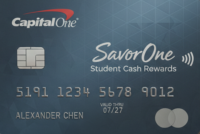
Capital One Student Cash Rewards
A heavy hitter for those with a lifestyle focused on dining and entertainment.
- Fees: $0 Annual Fees and $0 Foreign Transaction Fees.
- Eligibility: Must be a student (part-time or full-time) at an accredited institution.
- Why it’s suitable: Capital One is famous for “automatic limit reviews.” They typically increase your limit after the first 5-6 months of perfect payment history.
- Pros: 3% cashback on dining, entertainment, popular streaming, and at grocery stores.
- Cons: If you are not a student, you may be relegated to the “SavorOne for Good Credit” which lacks the welcome bonus.
- Credit Card Views Rating: 8.9/10
- GET APPROVED
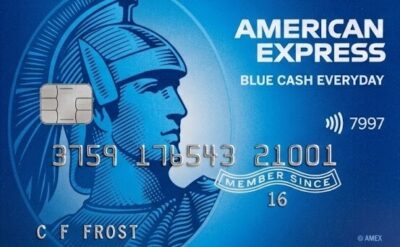
Amex Blue Cash Everyday®
The first “real” premium card many people get after 6 months of building.
- Fees: $0 Annual Fee.
- Eligibility: Typically requires a 670+ FICO score. Can sometimes be obtained via “Nova Credit” using international history.
- Why it’s suitable: American Express allows for the “3X CLI Hack.” After 61 days, you can often request a limit increase to 3x your starting amount with only a “soft pull.”
- Pros: 3% cashback on U.S. Supermarkets, Online Retail, and Gas; $84 Disney Bundle credit.
- Cons: Higher eligibility bar than secured cards.
- Credit Card Views Rating: 9.5/10
- GET APPROVED

Petal® 2 “Cash Back, No Fees” Visa
The “Fintech” alternative that looks at your bank statements instead of just your credit score.
- Fees: $0 Annual Fees and $0 Foreign Transaction Fee.
- Eligibility: No credit history required. They use a “Cash Score” based on your income and spending.
- Why it’s suitable: Limits can start as high as $5,000 for people with zero credit if their income is strong.
- Pros: Earn up to 1.5% cashback after 12 on-time payments; very transparent app.
- Cons: No “graduation” to a higher-tier card network (like Chase or Amex).
- Credit Card Views Rating: 8.5/10
- GET APPROVED
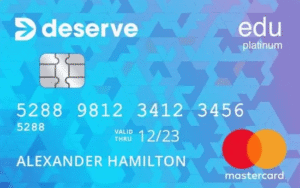
Deserve® EDU Mastercard
The premier choice for international students arriving in the U.S.
- Fees: $0 Annual Fee; $0 Foreign Transaction Fee.
- Eligibility: No SSN or ITIN required for international students.
- Why it’s suitable: They underwrite based on your university, major, and earning potential, which is much more favorable for newcomers than traditional FICO models.
- Pros: 1% cashback on all purchases; 1 year of Amazon Prime Student ($69 value).
- Cons: Low starting limits that are harder to raise compared to Discover.
- Credit Card Views Rating: 8.7/10
- GET APPROVED
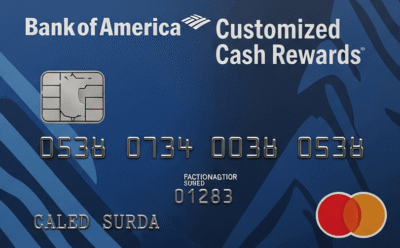
Bank of America® Customized Cash Rewards (Secured)
A versatile secured card for those who want to choose their own reward categories.
- Fees: $0 Annual Fee.
- Eligibility: Requires a security deposit ($200 to $5,000).
- Why it’s suitable: If you have a large amount of cash, you can “force” a high limit by providing a $5,000 deposit, which sets your baseline limit high for future card applications.
- Pros: 3% cashback in a category of your choice (e.g., Online Shopping or Dining).
- Cons: The “graduation” process can be slower and less predictable than Discover’s.
- Credit Card Views Rating: 9.0/10
- GET APPROVED
Part 3: 15 Insider Secrets to Raising Your Limit (The Action Plan)
If you want to see a change in 30 days, you cannot be passive. You must manipulate the data the banks see.
The Strategy Tier: Behavioral Hacks

- The “Income Update” Trick: Log into your banking app today. Most people forget to update their income after a raise or a side hustle. Higher income directly increases your “Capacity” in the bank’s eyes.
- The “AZEO” Method: “All Zero Except One.” Pay off all your cards to $0, except for one card which should show a 1%–3% balance. This maximizes your FICO score almost instantly by showing you have credit but aren’t “desperate” for it.
- The Mid-Cycle Payment: Don’t wait for the due date. Pay your balance before the statement closing date. This ensures a 0% or low utilization rate is reported to the bureaus.
- The “Heavy Usage, Full Pay” Strategy: Use 80% of your limit for daily expenses, but pay it off in full every single month. This signals to the bank’s algorithm: “This person needs more space, and they are responsible enough to handle it.”
- The “Lifestyle Change” Explanation: When calling for an increase, tell the rep you have “upcoming work travel” or “moving expenses.” Banks prefer a functional reason over “I just want more money.”
Part 4: Advanced Mechanics: Award Arbitrage and NAV Formulas
For readers of Credit Card Views, building a high limit isn’t just about spending power—it’s about Award Arbitrage, the art of earning points that are worth significantly more than 1 cent per point.
The Net Asset Value (NAV) of a Point
When you have a low limit, you can’t spend enough to earn massive sign-up bonuses. By raising your limit to $5,000+, you can unlock cards that offer 60,000 to 100,000 points.
- Formula:
NAV=Cash Price of Flight−Taxes/FeesPoints Required\text{NAV} = \frac{\text{Cash Price of Flight} – \text{Taxes/Fees}}{\text{Points Required}}NAV=Points RequiredCash Price of Flight−Taxes/Fees - Example: If a business class flight to India costs $4,000 but only requires 80,000 points, your NAV is 5 cents per point. With a $500 limit card, you are stuck earning 1% (1 cent). By raising your limit, you gain access to the “Arbitrage” tier of travel.
(Optional note added: “Always ensure your spending stays within budget to avoid interest charges while pursuing points.”)
Part 5: The 30-Day Step-by-Step Strategy
If you follow this plan exactly, you will maximize your chances of a “Yes” from the bank.
Week 1: Audit and Preparation
- Day 1: Check your credit report for errors using the Experian app.
- Day 3: Pay every credit card balance down to $0.
- Day 5: Log in to your bank’s portal and update your “Annual Income” to the most recent, accurate figure.
Week 2: The “Usage” Signal
- Day 8-12: Use your card for all small daily purchases. Aim to use about 40-50% of the limit.
- Day 14: Pay the entire balance off immediately. This shows the bank you have the “Cash Flow” to support a higher limit.
Week 3: The Profile Boost
- Day 15: If possible, have a family member add you as an Authorized User on a high-limit card.
- Day 18: Call your bank’s customer service. Ask: “Is my account fully verified? I want to ensure my employment and identity documents are up to date.”
Week 4: The Execution
- Day 25: Log into your app and find the “Request Credit Line Increase” button.
- Day 26 (The Recon Call): If the automated system says “No,” call the bank.
- Script: “Hi, I’ve been a loyal customer and I’ve paid my balance in full every month. I find the current limit restrictive for my daily needs, especially with upcoming travel. Can we review this for an increase based on my updated income and perfect payment history?”
- Day 30: Confirm the increase and set your new “Utilization” targets.
Data-Driven Comparisons
To understand where you stand, you must understand how you are being measured.
Table 1: Factors Affecting Your Credit Limit
| Factor | Weight/Impact | How to Improve |
| Payment History | 35% (High) | Use Autopay; never miss a single day. |
| Credit Utilization | 30% (High) | Keep reported balances below 10%. |
| Length of Credit History | 15% (Medium) | Keep your first “low limit” card open forever. |
| Total Annual Income | High (Internal) | Update your profile with bonuses/side income. |
| Housing Status | Moderate | Renting vs. Owning affects your “DTI” calculation. |
Part 6: FAQ: Everything Beginners Need to Know
- Is a $500 limit normal for a first card? Yes. In 2026, $300 to $500 is the standard “probationary” limit for almost all major U.S. issuers.
- How much should I ask for? If the request is manual, ask for double your current limit. If you have Amex, you can ask for triple.
- Does income really matter more than credit score for limits? For the initial limit, yes. The bank must ensure you don’t have more debt than you can reasonably pay with your salary.
- What is the “Credit Steps” program? It is a Capital One feature where they guarantee a limit increase after 5 months of on-time payments.
- Why did my limit increase request get denied? Common reasons include “Too many recent inquiries,” “Account too new,” or “Low usage of current limit.”
- Does checking my own score lower it? No. Checking your own score is a “Soft Inquiry” and has zero impact.
- Should I use my card if the limit is only $200? Yes! But pay it off 2-3 times a month so the “reported” balance stays low.
- Can international credit history be used in the U.S.? Yes, via partners like Nova Credit, which works with American Express to pull history from countries like India, Mexico, and the UK.
- How long does it take for a limit increase to show on my report? Usually within 30 to 45 days, or at the end of your next billing cycle.
- What is a “Hard Pull” vs. a “Soft Pull”? A hard pull lowers your score by 2–5 points; a soft pull does not affect your score at all. Always ask for a soft pull first.
Final Thoughts: Empowerment through Credit
A low credit limit is not a reflection of your worth—it is simply a reflection of the bank’s current data. By taking control of that data, updating your income, and timing your payments strategically, you can “force” the system to recognize your reliability. Your first U.S. credit card is the key to your financial future; treat it with respect, and the limits will follow.
Disclaimer: Always use credit responsibly. Do not overextend, and avoid strategies that might risk missed payments or high utilization beyond your means.
-END-
About the Author – Alen Vi
Alen Vi is a seasoned financial expert with over 10 years of experience specializing in the credit card industry. Throughout his career, he has worked with various leading media firms, providing in-depth analysis, insights, and guidance on personal finance, credit card rewards, and smart spending strategies. At Credit Card Views, Alen combines his extensive knowledge and practical expertise to help readers make informed decisions, maximize their cash back and rewards, and navigate the complex world of credit cards with confidence.
Disclaimer
The information provided on Credit Card Views is for general informational and educational purposes only and is not intended as financial, legal, or professional advice. While we strive to provide accurate and up-to-date information about credit cards, rewards programs, fees, and offers, terms and conditions can change frequently, and we cannot guarantee the accuracy, completeness, or timeliness of all content.
Credit card offers and eligibility criteria vary by issuer, credit score, and individual circumstances. Before applying for any credit card or making financial decisions, readers should conduct their own research and consider consulting with a qualified financial advisor.
Trust & Affiliate Disclosure
CreditCardViews.com provides independent and expert guidance to help you make informed credit card and financial decisions. Some links on this site are affiliate links. If you make a purchase through them, we may receive a small commission at no extra cost to you. Our recommendations are always based on research, user feedback, and expert analysis, and are not influenced by our partners. CreditCardViews.com does not issue credit cards or provide financial products directly. Final approval decisions are made solely by the issuing banks. Your trust and financial well-being are our top priority. Our platform uses SSL encryption and follows FTC, GDPR, and CCPA standards to provide secure, unbiased, and transparent credit card insights.