Written by : Alen Vi | Creditcardviews.com
From Arrival to Approval: Don’t Let the U.S. Credit System Leave You Invisible
Stepping off the plane into the United States is a rush of adrenaline, hope, and—if we’re being honest—unspoken fear. You’ve left behind your family, your favorite comfort foods, and a financial system that actually knew who you were. In your home country, you had a reputation. Here, to the cold algorithms of the U.S. banking system, you are a ghost.
There is a unique kind of heartache in being rejected for a simple international student credit card while you’re trying to build a new life. It feels like the door to the “American Dream” is being locked before you even get a chance to knock. But your U.S. credit score isn’t just a number; it’s your ticket to your first apartment, your first car, and the financial respect you deserve.
For the class of 2026, the landscape has shifted. While fintech has made zero-history borrowing easier, new federal visa regulations and AI-driven credit underwriting have created new hurdles. Based on our 2026 market analysis, here are the ten most common mistakes that could keep you in the financial shadows.
Mistake #1: The “No-SSN” Trap for International Student Credit Cards
Many students believe they cannot apply for credit without a Social Security Number (SSN). In 2026, this is a half-truth that leads to two extremes: waiting too long to start, or applying to the wrong banks and getting a hard inquiry (rejection) on their record.
The Reality: While major banks like Chase often require an SSN for their premium products, specialized student issuers (like Zolve, Deserve, and Firstcard) and established giants (like American Express and Bank of America) have robust pathways for those without an SSN.
The 2026 Fix: Use your passport and Form I-20 as primary ID. If you don’t have a job (and thus no SSN), apply for an Individual Taxpayer Identification Number (ITIN) immediately.
Mistake #2: Ignoring How Your Visa Type Affects U.S. Credit Approval
As of late 2025 and early 2026, the Department of Homeland Security (DHS) began transitioning many F-1 students from “Duration of Status” (D/S) to a fixed admission period (usually 4 years).
Why this matters: Credit card algorithms in 2026 are now programmed to flag visa expiration dates. If your visa expires in 4 years, a bank may be hesitant to grant a high-limit card in your 3rd year.
The Fix: Apply for your foundational cards in your Freshman or Sophomore year. This establishes a Length of Credit History that outlasts your initial visa window.
Mistake #3: Misunderstanding AI Underwriting for Student Credit Cards
In 2026, credit decisions are rarely made by humans. They are made by Machine Learning (ML) models. Under the 2026 AI Disclosure Acts, banks are now required to provide Adverse Action Notices that are more specific than ever.
The Fix: If rejected, read the notice. In 2026, these must specify if Alternative Data (like your bank balance) was the cause. You can often call a Reconsideration Line and provide manual proof of funds—like a scholarship letter—to override an AI’s “Thin File” rejection.
Mistake #4: The “Authorized User” Myth for Building Credit in the U.S.
The old advice was: “Have a cousin add you as an authorized user.” In 2026, anti-piggybacking algorithms have made this less effective.
The 2026 Update: While it helps your Credit Mix, the newest FICO models place much higher weight on accounts where you are the primary owner.
The Fix: Use the authorized user status as a “booster,” but apply for your own Secured Card within your first three months to prove independent credit responsibility.
Mistake #5: Under-reporting Global or Alternative Income as an International Student
When the application asks for “Annual Income,” students often only list meager campus job earnings.
The Reality: “Income” can legally include any money you have a reasonable expectation of access to.
The Fix: Under 2026 guidelines, if you are over 21, you can include:
- Monthly allowances from parents/sponsors
- Scholarship funds used for living expenses
- Personal savings
Mistake #6: Falling for High-Fee Travel Rewards Cards as Your First U.S. Credit Card
With the 2026 FIFA World Cup approaching, companies are launching aggressive Travel Rewards campaigns.
The Mistake: Applying for a high-fee “World Cup” card as your first card. These often require a 700+ score.
The Fix: Stick to no-annual-fee student cards. Your goal is to keep your first card forever to maintain a long Age of Account.
Mistake #7: The Zero-Balance Fallacy That Can Hurt Your Credit Score
Many students pay their balance the moment they make a purchase.
The Mistake: Having a “Statement Balance” of $0 every month. If the bank reports $0, it looks like you aren’t using credit.
The 2026 Strategy: Aim for a 1% to 9% utilization. If your limit is $1,000, let $50 show up on your statement, then pay it off in full.
Mistake #8: Missing Late Fee Cap Updates in 2026
Following 2025 court rulings, many major issuers in 2026 have returned to fees of $30 to $45 for a single missed payment.
The Fix: Set up Autopay for the minimum amount the day you get the card. This ensures you aren’t hit with a massive fee or a “30-day late” mark that can tank your U.S. credit score.
Mistake #9: Over-Applying and Triggering Hard Inquiries in the U.S.
Applying for five cards in one week is the fastest way to get blacklisted.
The Mistake: Every application triggers a Hard Inquiry. Multiple inquiries signal “Credit Hunger” to 2026 risk models.
The Fix: Space applications by at least 3 to 6 months. Use Pre-Approval tools (Soft Inquiries) before hitting submit.
Mistake #10: Skipping the Checking Account Relationship Can Reduce Approval Odds
In the age of fintech, many students skip traditional banks.
The Fix: Banks like Chase and Bank of America are significantly more likely to approve you if you’ve held a checking account for 3–6 months. The Chase Freedom Rise℠ is the 2026 “Gold Standard” for this strategy.
Case Study: Arjun’s 2026 “Credit Launch” Plan
Arjun, an MS student at Georgia Tech, arrived in August 2025.
- Month 1: Opened a Chase College Checking account. Transferred $2,000 (his semester living budget).
- Month 2: Applied for the Chase Freedom Rise. Approved with a $500 limit because of his existing relationship.
- Month 5: Applied for an ITIN using his university’s international office guidance.
- Month 8: His credit score hit 710. He used the Pre-Approval tool for American Express and was approved for the Blue Cash Everyday® without a hard pull until he accepted the offer.
2026 Regulatory & Technical Deep Dive
The Role of Section 1033 (Open Banking)
Under the CFPB’s 1033 rules, you now have the right to “port” your data. This means if you have a history of paying utilities or rent through a specific app, you can give a credit card issuer permission to “see” that data to prove you are creditworthy—even without a traditional FICO score.
ITIN Application: The “W-7” Roadmap
If you aren’t eligible for an SSN, do not wait.
- Obtain a Letter of Denial from SSA if required
- Complete Form W-7: Application for IRS Individual Taxpayer Identification Number
- Certify your passport via a Certified Acceptance Agent (CAA)—many universities have one on staff
Voices of Authority: Expert Advice for 2026
1. On Building a Relationship First
Source: International Student & Scholar Services (ISSO) General Guidance “F-1 and J-1 students often face a ‘thin file’ challenge upon arrival. The most reliable strategy is to open a U.S. checking account immediately. Most established banks utilize your average daily balance and consistent deposit history as a primary factor for internal credit approvals, often bypassing the need for a traditional FICO score for your first student card.”
2. On the SSN Requirement
Source: Social Security Administration (SSA) Policy for Non-Citizens “An SSN is not required to apply for a credit card, open a bank account, or obtain a driver’s license. If you are not authorized for employment, you are ineligible for an SSN. However, under federal law, financial institutions are permitted to accept a Passport and Form I-20 (for F-1 students) or an ITIN to verify your identity and process your credit application.”
3. On AI Underwriting & Adverse Action
Source: Consumer Financial Protection Bureau (CFPB) Circular 2023-03 “Under the Equal Credit Opportunity Act, if a lender uses AI or complex algorithms to deny your application, they are legally required to provide a specific ‘Adverse Action Notice.’ You have the right to know exactly why you were rejected—whether it was due to ‘insufficient credit history’ or ‘income estimation.’ In 2026, students can use these notices to identify where to provide manual proof of funds to override an automated rejection.”
The Top 5 Student Credit Cards for 2026 (Expert Review)
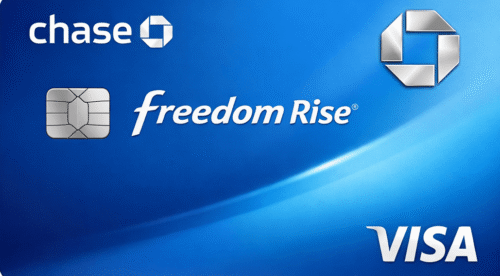
1. Chase Freedom Rise℠ — The “2026 Gold Standard”
- Best For: Students who can open a U.S. bank account immediately.
- Fees: $0 Annual Fee | 3% Foreign Transaction Fee.
- Offers: $25 statement credit for enrolling in Autopay (within 3 months).
- Eligibility: No credit history required. Pro Tip: Your odds of approval skyrocket if you have at least $250 in a Chase checking account.
- Pros: 1.5% flat cash back on everything; automatic review for an upgrade to the premium Freedom Unlimited after 12 months.
- Cons: Charges fees for use outside the U.S.; high APR if you carry a balance.
- The “Why”: In 2026, Chase is the most prestigious “starter” card. It’s the first step into the Ultimate Rewards ecosystem, which is the most valuable currency for future travel.
- CreditCardViews Rating: ⭐⭐⭐⭐⭐ (5/5) GET APPROVED

2. Discover it® Student Cash Back — The “High Earner”
- Best For: Students who want to maximize rewards on everyday campus spending.
- Fees: $0 Annual Fee | $0 Foreign Transaction Fee.
- Offers: Cashback Match™ — Discover automatically matches all cash back earned at the end of your first year (e.g., $150 becomes $300).
- Eligibility: No credit score required. Accepts SSN or ITIN.
- Pros: 5% cash back on rotating categories (Groceries, Gas, Amazon) up to $1,500/quarter; 1% elsewhere.
- Cons: You must manually “activate” the 5% categories every quarter or you lose the bonus.
- The “Why”: The “First Year Match” is the single most lucrative offer for a student in the U.S. It effectively makes this a 10% back card for your first year.
- CreditCardViews Rating: ⭐⭐⭐⭐⭐ (4.9/5) GET APPROVED
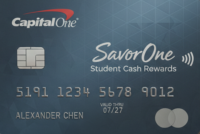
3. Capital One Savor Student — The “Food & Fun” Specialist
- Best For: Social students who spend on dining, streaming, and entertainment.
- Fees: $0 Annual Fee | $0 Foreign Transaction Fee.
- Offers: $50 sign-up bonus after spending $100 in the first 3 months.
- Eligibility: Designed for “Fair” or “No” credit history. Great for international students.
- Pros: Unlimited 3% cash back on dining, groceries (excluding Walmart/Target), streaming, and entertainment.
- Cons: No “Intro APR” period; interest starts immediately if you don’t pay in full.
- The “Why”: This card is the best “travel buddy.” Because it has no foreign transaction fees and high rewards on dining, it’s the perfect card to take back home during summer break.
- CreditCardViews Rating: ⭐⭐⭐⭐ (4.7/5) GET APPROVED
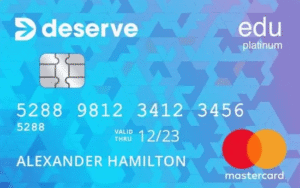
4. Deserve® EDU Mastercard — The “No-SSN” Specialist
- Best For: Students who just landed and don’t have an SSN or ITIN yet.
- Fees: $0 Annual Fee | $0 Foreign Transaction Fee.
- Offers: 1 Year of Amazon Prime Student (via statement credit after spending $500 in 3 months).
- Eligibility: No SSN required. Uses “Alternative Underwriting” (checks your bank balance and visa status).
- Pros: Includes Cell Phone Protection (up to $600); 1% flat cash back.
- Cons: Low rewards rate compared to Discover or Capital One.
- The “Why”: It’s the “path of least resistance.” If other banks say “No” because you lack an SSN, Deserve is built to say “Yes” using your I-20 and Passport.
- CreditCardViews Rating: ⭐⭐⭐⭐ (4.3/5) GET APPROVED
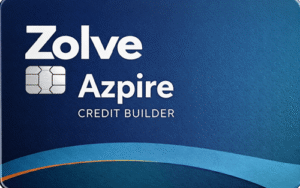
5. Zolve Azpire Credit Builder — The “Safety Net”
- Best For: Newcomers who want to build credit with 0% risk of debt.
- Fees: $0 Annual Fee | $0 Foreign Transaction Fee.
- Offers: Up to 10% cash back at select partner merchants.
- Eligibility: No SSN or Credit Check required. Can apply from your home country before arrival.
- Pros: Functions like a debit card but reports to all 3 credit bureaus; 0% APR (no interest, ever).
- Cons: You can only spend what you deposit into the account; does not report “Credit Utilization.”
- The “Why”: It is the ultimate “Credit Trainer.” It’s impossible to get into debt with this card, making it the safest way to “ghost-build” your score while you’re still learning the U.S. system.
- CreditCardViews Rating: ⭐⭐⭐⭐ (4.0/5) GET APPROVED
Quick Card Snapshot
| Card Name | Best For | Annual Fee | Foreign Fee | Top Perk |
| Chase Freedom Rise | Banking Loyalty | $0 | 3% | 1.5% Flat Rewards |
| Discover it Student | Max Cash Back | $0 | 0% | 1st Year Double Match |
| Capital One Savor Student | Dining & Travel | $0 | 0% | 3% on Dining/Groceries |
| Deserve EDU | No SSN/No ITIN | $0 | 0% | Amazon Prime Student |
| Zolve Azpire | Zero-Risk Building | $0 | 0% | No Credit Check |
Frequently Asked Questions (FAQ)
- Can international students get a credit card on their first day in the U.S.?
Yes, fintechs like Zolve or Firstcard allow you to apply immediately. Ensure you have your Form I-20 and Passport ready. - What happens to my credit score if I move back home after graduation?
Your U.S. credit score can go dormant. Keep one no-annual-fee card active with a small subscription to maintain history. - How do I report income as an international student?
Include parental allowances, scholarship stipends, and personal savings—listing these honestly is legal and boosts approval odds. - Does ITIN affect future SSN credit approval?
No. When you later get an SSN, you can merge your ITIN history into the new number. - Why was I rejected even with a large checking balance?
Banks consider behavior, not just balance. Ensure your name and address match your university records exactly. - Is a secured card worth it?
Yes. It is a guaranteed way to build U.S. credit. Most secured cards graduate to regular cards after 7 months. - Does my home country credit score count in the U.S.?
Generally no, but services like Nova Credit can translate supported countries’ history to bypass the “thin file” problem. - Can I pay tuition with a credit card?
Yes, but beware 2–3% convenience fees. Avoid maxing out small limits as it affects your Utilization Ratio. - How many cards should I have?
Two cards from different issuers is the 2026 sweet spot for international students. - I missed a payment by 2 days. Is my credit ruined?
No, most banks report late payments after 30 days. Call immediately—banks often waive first-time late fees.
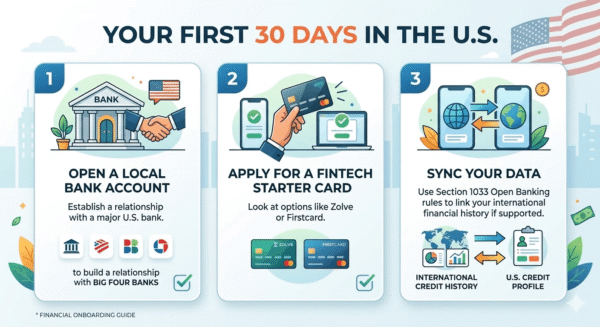
Checklist: Your First 30 Days in the U.S.
- Open a Local Bank Account: Prioritize Big Four banks to build a relationship
- Apply for a Fintech Starter Card: Look at Zolve or Firstcard
- Sync Your Data: Use Section 1033 Open Banking rules to link your international history if supported
********
About the Author – Alen Vi
Alen Vi is a seasoned financial expert with over 10 years of experience specializing in the credit card industry. Throughout his career, he has worked with various leading media firms, providing in-depth analysis, insights, and guidance on personal finance, credit card rewards, and smart spending strategies. At Credit Card Views, Alen combines his extensive knowledge and practical expertise to help readers make informed decisions, maximize their cash back and rewards, and navigate the complex world of credit cards with confidence.
Disclaimer
The information provided on Credit Card Views is for general informational and educational purposes only and is not intended as financial, legal, or professional advice. While we strive to provide accurate and up-to-date information about credit cards, rewards programs, fees, and offers, terms and conditions can change frequently, and we cannot guarantee the accuracy, completeness, or timeliness of all content.
Credit card offers and eligibility criteria vary by issuer, credit score, and individual circumstances. Before applying for any credit card or making financial decisions, readers should conduct their own research and consider consulting with a qualified financial advisor.
Trust & Affiliate Disclosure
CreditCardViews.com provides independent and expert guidance to help you make informed credit card and financial decisions. Some links on this site are affiliate links. If you make a purchase through them, we may receive a small commission at no extra cost to you. Our recommendations are always based on research, user feedback, and expert analysis, and are not influenced by our partners. CreditCardViews.com does not issue credit cards or provide financial products directly. Final approval decisions are made solely by the issuing banks. Your trust and financial well-being are our top priority. Our platform uses SSL encryption and follows FTC, GDPR, and CCPA standards to provide secure, unbiased, and transparent credit card insights.