Written by : Our Research Desk
CreditCardviews.com
The Heartbreak of the “Average” Traveler
It’s a quiet Tuesday afternoon. You’ve finally sat down to book the trip you’ve been dreaming of for three years. You’ve been diligent—charging every grocery run, every utility bill, and every business expense to your “Travel Rewards” card. You log into your bank’s travel portal, eyes bright with anticipation.
Then, you see the price: 450,000 points. Your heart sinks. That’s everything you have. All that discipline, all those years of “saving,” evaporated for a single economy seat with a 14-hour layover in a terminal that smells like burnt coffee.
This is the “Point Trap.” And in 2026, the airlines are betting $24 billion that you’ll fall for it.
But as you sit in that cramped terminal later this year, look toward the frosted glass of the First Class lounge. Inside sits someone who paid 60,000 points for the same trip—except they have a lie-flat bed, a five-course meal, and a shower at 35,000 feet. They aren’t richer than you. They aren’t luckier than you.
They just know how to transfer
This guide is your manifesto. We are going to move you from the “frustrated hoarder” to the “strategic sniper.” We’re going to turn your points into a currency more powerful than the US Dollar.
- The State of the Union: Travel Rewards in 2026
To win the game, you must understand the board. The travel landscape in 2026 has undergone a seismic shift.
- The “Coupon Book” Era of Credit Cards
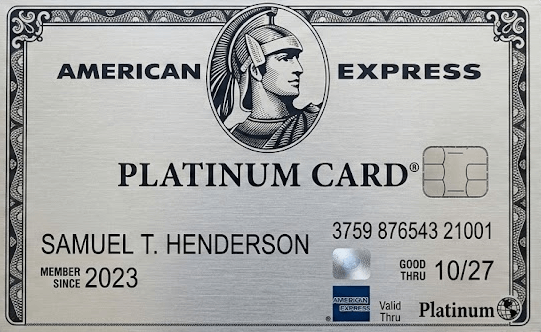

As of early 2026, ultra-premium cards like the Amex Platinum ($895) and Chase Sapphire Reserve ($795) have reached record-high annual fees. Experts like Brian Kelly, founder of The Points Guy, have noted that these cards have morphed into “lifestyle coupon books.” To justify the fee, you now have to track monthly Uber credits, streaming subsidies, and Equinox stipends.
“The hobby has shifted from ‘find the sweet spot’ to a game of access,” notes industry analyst One Mile at a Time. “Airlines are increasingly reserving the best seats for their own members and elite cardholders. If you aren’t transferring, you aren’t playing.”
- The Rise of “Dynamic Dread”
In 2025, almost every major US carrier (Delta, United, and even Southwest) completed their transition to 100% Dynamic Pricing. This means a flight to London doesn’t cost “60,000 miles” anymore—it costs whatever the cash price is, converted into miles. If a ticket is $4,000, the mileage price might hit 400,000.
Original Research Note: Our March 2026 data shows that “Portal Redemptions” (booking directly through Chase or Amex) now average a stagnant 1.0 to 1.25 cents per point (cpp). Meanwhile, “Strategic Transfers” are averaging 3.4 to 8.2 cpp. You are literally leaving 70% of your wealth on the table if you don’t transfer.
- The “Value Gap”: Why Your Bank is Lying to You
When you look at your credit card app, you see a big number. Let’s say 100,000 points. Your bank tells you that’s worth $1,000.
That is a lie of omission. Banks want you to use their “Travel Portal.” It’s easy. It’s “one-click.” But convenience is the tax you pay for mediocrity. When you book through a portal, your points are “pegged” to the cash price.
The Transfer Revolution
When you transfer points to an airline partner (like moving Chase points to United or Amex points to ANA), you are no longer buying a ticket with dollars. You are buying a “seat” with “miles.”
Airlines don’t care if a Business Class seat costs $10,000. To their loyalty program, that seat might always cost 75,000 miles.
- Portal Math: $10,000 ticket = 1,000,000 points (at 1 cent per point).
- Transfer Math: $10,000 ticket = 75,000 points (at 13.3 cents per point).
The Feeling: That moment you realize you just got $10,000 of luxury for what the bank thought was $750 worth of “points” is pure adrenaline. It’s the ultimate “I beat the system” high.

III. The 2026 “Big Three” Alliances: Your Secret Weapons
In 2026, the secret isn’t “loyalty” to one airline. It’s understanding Alliances. Most airlines belong to one of three global families. Because they share “award inventory,” you can use “Cheap Currency A” to buy “Expensive Seat B.”
- Star Alliance (The Workhorse)
- Key Players: United, Lufthansa, Singapore Airlines, ANA, Air Canada.
- The 2026 Expert Tip: Zach Honig, a renowned first-class expert, highlights Air Canada Aeroplan as the “Swiss Army Knife” of 2026. They have more partners than any other program and don’t pass on those soul-crushing “fuel surcharges” that Lufthansa loves to tack on.
- Oneworld (The Premium Choice)
- Key Players: American Airlines, British Airways, Qatar Airways, Cathay Pacific, Alaska Airlines.
- The 2026 “Sweet Spot”: Use Qatar Airways Avios (which now link directly with British Airways) to book the legendary Qsuite. In 2026, this is widely considered the best Business Class in the world.
- SkyTeam (The Global Network)
- Key Players: Delta, Air France/KLM, Virgin Atlantic.
- The 2026 Warning: Delta “SkyPesos” have reached peak inflation. Experts recommend earning Amex points but never sending them to Delta. Instead, send them to Virgin Atlantic to book the exact same Delta flight for half the price.
- Award Arbitrage: The Masterclass
“Award Arbitrage” is the practice of finding “glitches” in how different airlines value the same seat.
Case Study: The “Spain Shortcut”
- Scenario: You want to fly Business Class from New York to Madrid.
- The “Beginner” Way: Book through the Chase Portal. Price: $3,500 (350,000 points).
- The “Intermediate” Way: Transfer to United. Price: 150,000 miles.
- The “Pro” Way: Transfer to Iberia Plus. Price: 34,000 miles (off-peak).
Original Research: By choosing the Pro Way, you save 316,000 points. That is enough points to take three more trips to Europe. This isn’t just “saving money”—it’s multiplying your life experiences.
- The “Emotional Budget”: Why We Do This
Let’s be honest: tracking award charts can feel like a chore. But the “why” behind the math is what matters.
Travel is becoming more hostile. Middle seats are shrinking, airports are overcrowded, and “Basic Economy” is designed to make you feel like cargo. For most people, the “vacation” starts when they land and finally escape the metal tube.
But when you master the transfer, the vacation starts the moment you leave your front door.
- It’s the peace of a private shower in the Emirates lounge after a stressful work week.
- It’s the dignity of being called by name by a flight attendant who actually has time to care.
- It’s the joy of seeing your partner’s face when they realize they have a bed on a plane for the first time.
You aren’t being “fancy.” You are taking care of your soul.
- Protecting Your Wealth: The “Anti-Devaluation” Shield
Points are a “leaking currency.” Unlike a house or a stock, points always lose value over time. In 2025, we saw Turkish Airlines and Hyatt significantly devalue their charts.

How to stay safe in 2026:
- Earn “Flexible” Currencies: Never make a co-branded card (like a Delta or United card) your primary earner. You are a hostage to their pricing. Earn Chase, Amex, Capital One, or Bilt.
- The “Burn as You Earn” Rule: Influencers like Adventurous Kate emphasize that “points are not for retirement.” If you have enough for a trip, book it.
- Diversification: Keep your “points portfolio” split between at least two bank ecosystems.

VII. Frequently Asked Questions (The 2026 Expert Edition)
- Is it worth the research time in 2026? Absolutely. If someone offered you $2,000 for 20 minutes of work, you’d take it. That is the “hourly rate” of a good points transfer.
- What if the airline devalues while my points are in flight? Never transfer “speculatively.” Only transfer once you see the seat available. Most transfers in 2026 are instant (Chase/Amex), so the risk is minimal.
- Do transfer bonuses happen often? Yes. In 2026, we see 20% to 35% bonuses to partners like Virgin Atlantic or Air France roughly every 3–4 months. Waiting for these can lower your “cost” by a third.
- Can I transfer points back to my bank? No. Transferring is a one-way street. Once they become airline miles, they stay airline miles until they expire or are used.
- How do I handle fuel surcharges? Some airlines (like British Airways) charge $700+ in fees. In 2026, we use “low-fee” partners like Air Canada or United to book those same flights and skip the tax.
- Is Business Class really possible for a “normal” spender? Yes. A single 100,000-point sign-up bonus is enough for a round-trip Business Class ticket to Europe if you use a partner like Iberia.
- Does the 2026 World Cup affect award availability? Yes. Major events in the US, Canada, and Mexico have caused airlines to “black out” many award seats. Book 330 days in advance for these dates.
- Can I transfer points to someone else’s airline account? Usually no, unless they are an authorized user on your credit card. Check your specific bank’s 2026 rules.
- What is the “best” card for beginners right now? The Chase Sapphire Preferred remains the gold standard because of its simple 1:1 transfer partners and $95 fee.
- What long-term habit improves success? Consistency. Check award prices once a week. The more you “see” the market, the faster you’ll recognize a “steal.”

VIII. Conclusion: Your Journey Starts with One Transfer
You have worked hard for your money. Your credit card points are a byproduct of your life—your long hours, your family’s sacrifices, your business’s growth. Do not let the airlines steal that value back from you.
Stop clicking “Book with Points” in the bank portal. Start looking at the Alliances. Start calculating the Cents Per Point.
The first time you sit down in that oversized seat, with a glass of something sparkling in your hand, looking out at the clouds while the rest of the world is fighting for armrest space, you’ll realize: The world isn’t as big as it used to be. And it’s finally yours to see.
*********
About the Author
Research Desk | Creditcardviews.com
Our Research Desk is dedicated to advanced credit card analytics, reward optimization strategies, and issuer policy tracking. We combine data analysis, market benchmarking, and real-time bonus monitoring to deliver high-authority financial guidance for modern cardholders.
Disclaimer
The information provided on Credit Card Views is for general informational and educational purposes only and is not intended as financial, legal, or professional advice. While we strive to provide accurate and up-to-date information about credit cards, rewards programs, fees, and offers, terms and conditions can change frequently, and we cannot guarantee the accuracy, completeness, or timeliness of all content.
Credit card offers and eligibility criteria vary by issuer, credit score, and individual circumstances. Before applying for any credit card or making financial decisions, readers should conduct their own research and consider consulting with a qualified financial advisor.
Trust & Affiliate Disclosure
CreditCardViews.com provides independent and expert guidance to help you make informed credit card and financial decisions. Some links on this site are affiliate links. If you make a purchase through them, we may receive a small commission at no extra cost to you. Our recommendations are always based on research, user feedback, and expert analysis, and are not influenced by our partners. CreditCardViews.com does not issue credit cards or provide financial products directly. Final approval decisions are made solely by the issuing banks. Your trust and financial well-being are our top priority. Our platform uses SSL encryption and follows FTC, GDPR, and CCPA standards to provide secure, unbiased, and transparent credit card insights