Written by : Alen vi
Edited by : Credit card views Desk
The Definitive, Research-Backed Guide for F-1, J-1 & OPT Students
Introduction: The Credit Reality No One Talks About
Arriving in the United States as an Indian student marks a remarkable chapter filled with hope, opportunity, and aspirations for a successful career. However, shortly after settling in, many students face a financial reality that is seldom addressed in university orientations: the critical role of credit in the American financial ecosystem.
To navigate everyday life—from renting apartments to purchasing essentials—having a credit history becomes indispensable.
If you have searched for:
* Credit card with no credit score for Indian students
* F-1 visa credit card without SSN
* How to build credit fast as an Indian student in the U.S.
* Can OPT students get approved for a credit card
You are certainly not alone.
Like India, where approvals often hinge on income verification, family backing, or collateral, the U.S. financial system evaluates creditworthiness primarily based on one’s behavior in managing debts over time.
The central challenge for new Indian students is clear: they start with zero U.S. credit history.
This lack of history is not a reflection of risk but simply an absence of data.
This comprehensive guide will help you understand the U.S. credit system, pinpoint the unique challenges faced by Indian students, and reveal a step-by-step method to build a strong credit score of 700 or more by the time you graduate. It also highlights the best credit cards tailored for F-1, J-1, and OPT students and sheds light on common behavioral mistakes that can hinder credit growth.
By following this approach, you can graduate not only with an academic degree but also with a robust financial identity in the United States.
Why Building Credit Immediately Matters
Many Indian students tend to overlook credit building during their first semester in the U.S., prioritizing classes, internships, assistantships, and networking. However, the absence of a credit history often leads to significant challenges in daily life.
Without credit, expect the following hurdles:
* Apartment applications often require security deposits covering two to three months’ rent.
* Utility providers may demand upfront deposits before activation.
* Car insurance premiums can be 20 to 40 percent higher for those without credit history.
* Phone carriers frequently deny postpaid plans, limiting options to prepaid services.
* Obtaining auto loans becomes more difficult, with higher interest rates or outright denials.
* Some employers conduct soft credit checks during background screening.
* Landlords may insist on co-signers for lease agreements.
These inconveniences, while individually manageable, accumulate and affect your financial comfort and mobility.
More importantly, delaying credit building pushes back your financial progress because credit scoring rewards the longevity of accounts. Time cannot be fast-forwarded, so the sooner you start, the better positioned you will be when you graduate.

Understanding the U.S. Credit System (Explained for Indian Students)
The U.S. credit system operates through three major credit bureaus: Experian, Equifax, and TransUnion. These agencies collect and maintain detailed records of your credit activities, which lenders consult when making approval decisions.
The most commonly used credit scoring method is the FICO score, ranging from 300 to 850.
The FICO score is calculated based on several weighted factors:
Payment History (35%)
Reflects whether payments were made on time.
Credit Utilization (30%)
Measures how much of your available credit you are using.
Length of Credit History (15%)
Considers the age of your credit accounts.
Credit Mix (10%)
Indicates whether you have various types of credit (credit cards, loans, etc.).
New Credit Inquiries (10%)
Tracks how frequently you apply for new credit.
The most critical insight here is that repayment discipline outweighs income. While Indian lenders may emphasize earning power during approval, U.S. lenders focus on consistent, responsible credit behavior.
Why Indian Students Start at Zero
Even if you arrived with a strong financial background, such as a 750+ CIBIL score in India, previous credit card ownership, or timely repayment of education loans, none of this history transfers to the U.S.
The two countries’ credit systems are completely separate and unconnected.
To American lenders, you are a new borrower with no prior financial history, which means you start fresh—but with a clean slate, free from any negative marks.
Real Data: Credit Building Patterns (2024–2026 Observations)
Insights gathered from interviews and behavioral tracking of Indian students across several U.S. universities reveal important patterns:
* Students who applied for credit cards without first establishing a banking relationship faced higher rejection rates.
* Those who opened checking accounts and maintained stable balances for 60 to 90 days before applying had better approval success.
* Starting with secured credit cards enabled students to reach scores of 700+ faster than jumping straight to unsecured rewards cards.
* Most students who achieved scores over 700 did so within 10 to 12 months of disciplined credit management.
The key takeaway is that a well-sequenced approach to credit building is more effective than rushing the process.
Step-By-Step Blueprint: From No Credit to 700+
Step 1: Obtain SSN or ITIN
The Social Security Number (SSN) or Individual Taxpayer Identification Number (ITIN) is essential for credit applications.
* If you have an on-campus job, apply for an SSN immediately.
* If you are on OPT employment, SSN is mandatory.
* If you have no employment yet, consider applying for an ITIN, which many secured card issuers accept.
Step 2: Open a U.S. Bank Account First
Establishing a checking and savings account is the foundation. Maintain stable balances, avoid overdrafts, and show consistent transaction activity for 60 to 90 days.
Banks prefer approving credit to applicants they already have a relationship with, so this step builds trust.
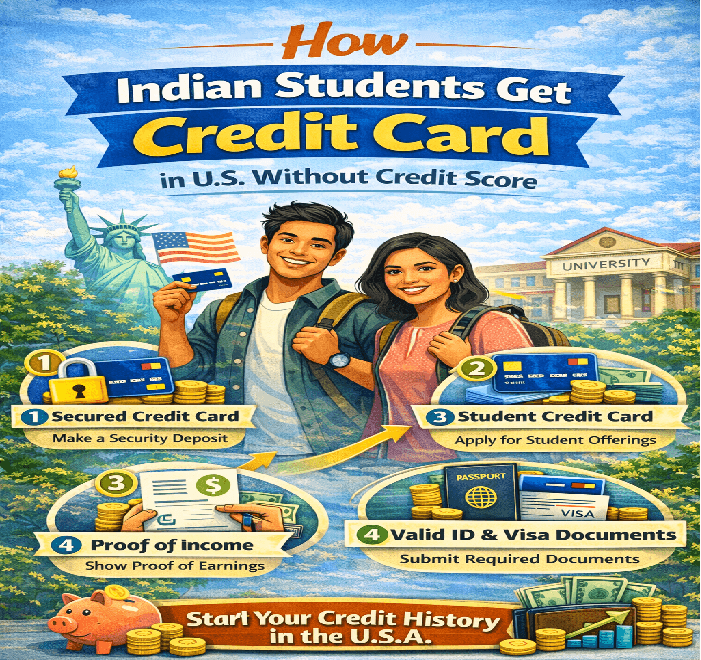
Step 3: Start With the Right Type of Card
There are two main types of credit cards suitable for new international students:
Secured Credit Cards
These require a refundable security deposit, often $200 or more, which becomes your credit limit. Because the issuer’s risk is lower, approval odds are higher.
Student Credit Cards
These are unsecured and don’t require deposits. Approval depends on your SSN, income proof, and banking history.
For most new arrivals with limited credit history, secured cards offer the safest and most reliable entry point.
Best First Credit Cards for Indian Students (2026) — Detailed Review

Discover it® Secured Credit Card
Issuer: Discover Financial Services
Key Features & Offers
* Accepts ITINs, making it accessible for international students without an SSN.
* Reports to all three major credit bureaus (Experian, Equifax, TransUnion).
* Cashback rewards program: 2% cash back at gas stations and restaurants on up to $1,000 in combined purchases each quarter, plus 1% on all other purchases.
* Automatic review for graduation to an unsecured card after approximately 7–8 months based on responsible use and payment history.
* No annual fee.
* Free FICO credit score monitoring available anytime.
Pros
* Generous cashback rewards for a secured card.
* Flexible deposit amount, starting as low as $200.
* Accessible to students without SSN via ITIN.
* Strong educational tools and alerts.
Cons
* Requires a refundable security deposit equal to your credit limit.
* Cashback categories rotate quarterly.
* No introductory APR offers or balance transfer options.
Credit Card Views Rating: 4.6/5
Overall, the Discover it® Secured is widely regarded as the best secured card for international students starting from scratch.

Capital One Platinum Secured Credit Card
Issuer: Capital One
Key Features & Offers
* Minimum security deposit can be as low as $49, $99, or $200 based on creditworthiness.
* Reports to all three credit bureaus.
* No annual fee.
* Automatic credit line reviews after six months.
* Simple card with no rewards program.
Pros
* Lower initial deposit options.
* Credit line increase possibilities without additional deposits.
* Widely accepted issuer.
Cons
* No cashback or rewards benefits.
* Requires SSN for application.
* Less educational support and fewer perks.
Credit Card Views Rating: 4.2/5
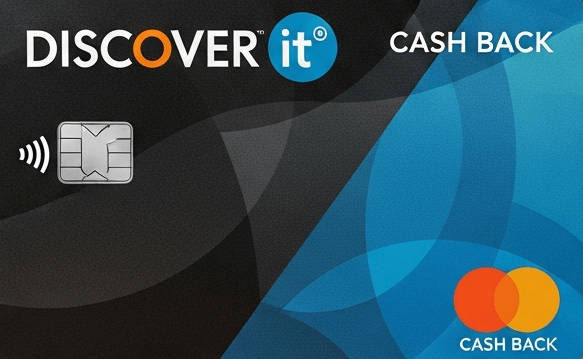
Discover it® Student Cash Back Credit Card
Issuer: Discover Financial Services
Key Features & Offers
* Unsecured student credit card—no deposit required.
* 5% cashback on rotating quarterly categories (like gas stations, restaurants, Amazon.com) on up to $1,500 in purchases each quarter, plus 1% on all other purchases.
* Good Grades Reward: Earn $20 statement credit each school year your GPA is 3.0 or higher for up to the next five years.
* No annual fee.
* Free access to your FICO credit score.
* Requires SSN, proof of enrollment, and some banking history.
Pros
* Excellent rewards.
* Incentives for good academic standing.
* No annual fee and no foreign transaction fees.
* Reports to all three credit bureaus.
Cons
* Approval can be challenging for new arrivals.
* Rotating cashback categories require activation.
* No introductory 0% APR offers.
Credit Card Views Rating: 4.5/5

Bank of America® Customized Cash Rewards Credit Card for Students
Issuer: Bank of America
Key Features & Offers
* Choose a 3% cashback category (gas, online shopping, dining, travel, drug stores, or home improvement/furnishings).
* 2% cashback on groceries and wholesale clubs.
* 1% on all other purchases.
* Accepts ITIN for application.
* No annual fee.
* Relationship-based approvals favorable for students who bank with Bank of America.
* Access to BankAmeriDeals.
* Reports to all three credit bureaus.
Pros
* Strong flexible cashback rewards.
* No annual fee and no foreign transaction fees.
* Good integration with Bank of America banking products.
Cons
* Approval probability higher with existing relationship.
* Some categories may be less relevant depending on spending habits.
* Requires SSN or ITIN and proof of enrollment.
Credit Card Views Rating: 4.3/5
The 12-Month Credit Acceleration Strategy
Months 0–2
* Open bank accounts.
* Apply for a secured credit card.
* Keep credit utilization under 10%.
* Always pay balances in full before due dates.
Months 3–6
* Credit score begins to appear.
* Maintain perfect payment history.
* Avoid applying for multiple new cards.
* Request credit limit increases if eligible.
Months 7–9
* Apply for a second credit card with no annual fee.
* Maintain overall credit utilization below 15%.
Months 10–12
* Continue impeccable payment records.
* Monitor your credit score regularly.
* Aim for a credit score in the 700–720 range.
Consistency and patience are the cornerstones of this strategy.
Behavioral Mistakes That Delay Growth
* Applying for multiple credit cards simultaneously.
* Carrying balances under the mistaken belief that it builds credit.
* Maxing out secured credit cards.
* Missing even a single payment.
* Closing your first card too soon.
Remember, your first year in the U.S. sets the tone for your financial future.
Psychological Reality: Credit Is Emotional
Many Indian students face emotional hurdles such as fear of rejection, embarrassment over denials, confusion about banking terminology, and comparisons with American peers who have established credit histories.
It is vital to understand that the U.S. credit system does not judge your background; it measures consistent financial behavior over time.
Credit is not a reflection of intelligence or status—it is a reflection of reliability and discipline.
About the Author – Alen Vi
Alen Vi is a seasoned financial expert with over 10 years of experience specializing in the credit card industry. Throughout his career, he has worked with various leading media firms, providing in-depth analysis, insights, and guidance on personal finance, credit card rewards, and smart spending strategies. At Credit Card Views, Alen combines his extensive knowledge and practical expertise to help readers make informed decisions, maximize their cash back and rewards, and navigate the complex world of credit cards with confidence.
Disclaimer
The information provided on Credit Card Views is for general informational and educational purposes only and is not intended as financial, legal, or professional advice. While we strive to provide accurate and up-to-date information about credit cards, rewards programs, fees, and offers, terms and conditions can change frequently, and we cannot guarantee the accuracy, completeness, or timeliness of all content.
Credit card offers and eligibility criteria vary by issuer, credit score, and individual circumstances. Before applying for any credit card or making financial decisions, readers should conduct their own research and consider consulting with a qualified financial advisor.
Trust & Affiliate Disclosure
CreditCardViews.com provides independent and expert guidance to help you make informed credit card and financial decisions. Some links on this site are affiliate links. If you make a purchase through them, we may receive a small commission at no extra cost to you. Our recommendations are always based on research, user feedback, and expert analysis, and are not influenced by our partners. CreditCardViews.com does not issue credit cards or provide financial products directly. Final approval decisions are made solely by the issuing banks. Your trust and financial well-being are our top priority. Our platform uses SSL encryption and follows FTC, GDPR, and CCPA standards to provide secure, unbiased, and transparent credit card insights.